OpenAI plans to acquire Pierre Computer Company and integrate its Code Storage service into Codex. The pending deal extends the coding agent beyond generation, but no complete GitHub replacement has been announced.
ExoMars measurements repeatedly place trace hydrogen chloride above fissures near Alba Mons during an unusual season. The pattern strengthens the case for recent or continuing activity below Mars, but no magma, eruption or hydrothermal system has been directly observed.
The Federal Circuit affirmed that Sonos does not infringe Google’s digital-rights-management patent because grouped speakers do not all directly use the claimed private key. The nonprecedential ruling shows how a few technical words can decide a connected-device patent case before trial.
Ifezuntirgene inilparvovec could become the first treatment intended to alter Huntington’s disease progression. Its May 2027 review deadline is a milestone, not an endorsement: the application relies on a small Phase I/II program and external controls, while four-year results missed statistical significance on the primary measure.
Marvell has agreed to acquire Lumentum in an all-stock transaction that would combine custom AI silicon and switching with lasers, transceivers and optical-circuit switching. The scale is extraordinary, but the deal is a proposed 2028 combination—not completed consolidation.
The Unified Patent Court has held Enanta’s European coronavirus-protease patent invalid and rejected its infringement case against Pfizer’s Paxlovid across 18 participating states. The cross-border result is clear; the legal and technical reasoning is not, because the judgment has not been made public.
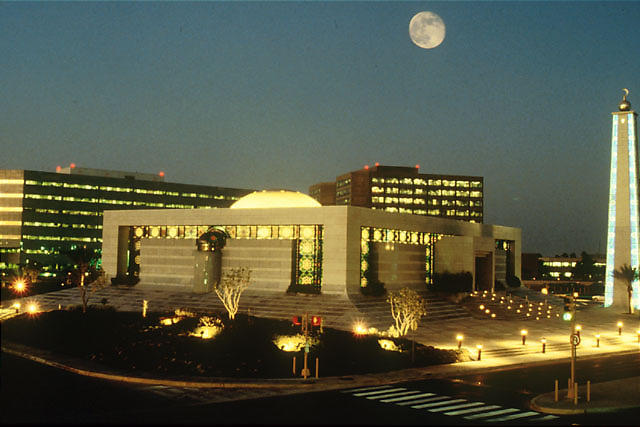
Saudi Aramco has closed a 49% investment in state-backed AI company HUMAIN, contributing about $2.6 billion in cash plus computing and digital assets. The transaction joins oil-industry demand, sovereign capital and a 3-gigawatt data-center ambition—but it does not disclose HUMAIN’s valuation, total build cost or how much capacity is already operating.
Energy North has withdrawn the June 2028 first-power date for its proposed off-grid AI campus in Australia’s Northern Territory. The project is not cancelled, but its 1-gigawatt computing plan now depends on an environmental review whose timetable has been suspended while regulators set the rules.
A US appeals court reversed a $9.15 million attorneys’ fee award against ChromaDex and Dartmouth, finding that their defense of nicotinamide-riboside supplement patents was not exceptionally meritless. The decision does not revive the invalid claims, but it draws a consequential line between losing a natural-product patent case and litigating one unreasonably.
After a record $6.3 billion theft, Binance says it used emergency reserves, an insurance fund and corporate money to replace most affected assets. The remaining tokens are less liquid, withdrawals are still suspended, and the complete cryptographic reserve proof is not due until Tuesday.
The appeals court says software disclosed to a reseller can retain trade-secret protection when access is governed by licences and confidentiality duties. SS&C’s case against Arcesium may proceed, but the ruling does not find that misappropriation occurred.
The CJEU’s first generative-AI case draws a legal line between reporting facts and recognizably reusing journalism. The opinion is not a judgment, but it could shape how grounded chatbots retrieve, summarize and pay for news across the EU.
The Federal Circuit affirmed that Sonos does not infringe Google’s digital-rights-management patent because grouped speakers do not all directly use the claimed private key. The nonprecedential ruling shows how a few technical words can decide a connected-device patent case before trial.