
NVIDIA bets factory-built AI data centers can deploy in 14 days
NVIDIA’s DSX POD reference design moves the integration of Vera Rubin computing, networking, power and liquid cooling into modular containers. The company says partners can connect units at a prepared site in as little as 14 days, but that clock does not include the hardest site, grid and permitting work.
The story
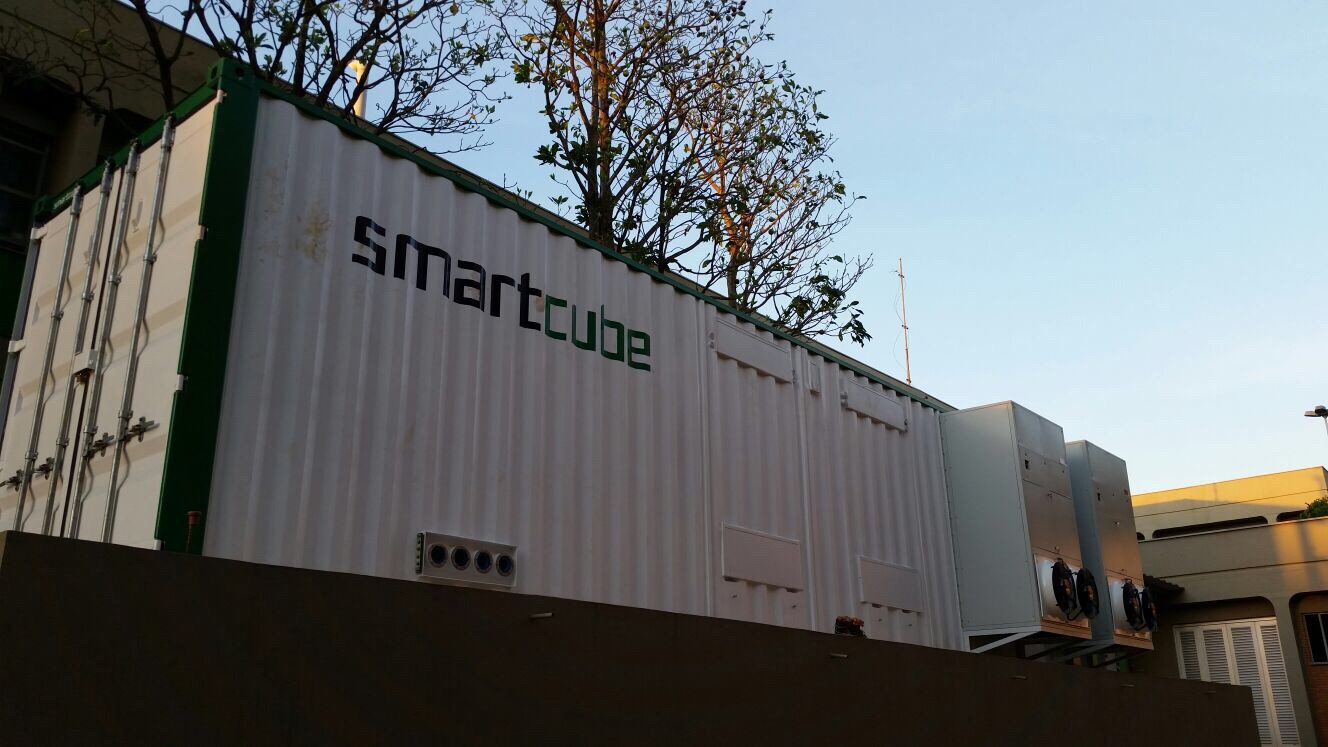
NVIDIA has introduced a factory-built approach to AI data centers that it says could cut deployment at a prepared site from six months to as little as 14 days. Called DSX POD, the design packages Vera Rubin computing systems with networking, rack-level power, cabling and liquid cooling inside purpose-built modular containers. Partners would integrate and test the units in a manufacturing facility before shipping them to a customer.
The announcement at GTC Berlin on October 21 is a reference design, not a finished data center that NVIDIA will build alone. The company is specifying a repeatable architecture that equipment and infrastructure partners can manufacture and deliver. Its initial list includes Anduril, Armada, Bull, Crusoe, DayOne, Dell Technologies, Eaton, HPE, Lenovo, Schneider Electric, Vertiv and several Asian manufacturing groups. NVIDIA says the ecosystem is working toward worldwide availability in early 2027.
That distinction matters because the headline number has a narrow starting line. NVIDIA says a DSX POD arrives ready to connect to power, cooling, networking and other infrastructure at a prepared site. The 14-day claim therefore concerns deployment after those prerequisites exist. It does not mean a new AI campus can move from land acquisition to live workloads in two weeks, nor does it remove planning approval, grid interconnection, civil construction or the production lead time for the modules themselves.
What the model could change is the integration phase. Traditional builds bring racks, piping, cables, switches and supporting systems together onsite, where labor scheduling and late component problems can cascade across the project. NVIDIA says DSX POD shifts rack-to-rack cabling, wiring, piping and functional validation into a controlled factory environment while site preparation proceeds separately. The commercial logic resembles other forms of prefabricated construction: repeat more work under standardized conditions, then shorten final assembly in the field.
Independent coverage supports the scope of the announcement but not yet the performance claim. Reuters reported that NVIDIA presented the DSX POD design as factory-built modules based on Vera Rubin and repeated the company’s two-week comparison with six months. The Associated Press described the system as a ready-made modular computing center intended to move setup at a prepared site from months to days. Neither report identified a completed customer deployment that independently demonstrates the 14-day result.
The timing is significant for Europe, where NVIDIA used the Berlin event to argue that limited computing capacity constrains local AI development. The Associated Press reported that Europe has about 5% of global AI compute capacity compared with roughly 75% in the United States. NVIDIA has a clear commercial interest in closing that gap: more infrastructure based on its architecture means more demand for its processors, networking and software, as Reuters noted in its account of the conference.
Modularity does not make an AI data center a simple shipping-container project. Dense accelerator clusters require large and stable power feeds, high-capacity heat rejection, fast external networks, physical security and equipment capable of surviving transport. A modular unit can arrive pre-integrated and still wait for a substation, fiber route, water strategy or local authorization. Those external dependencies increasingly determine where new AI capacity can be energized.
There are also unanswered product questions. NVIDIA did not disclose pricing, the computing capacity or power demand of a standard configuration, manufacturing volume, transport limits or a first customer. Its release classifies expectations about availability and deployment benefits as forward-looking. The early-2027 target depends on third parties converting the reference design into systems, securing components and qualifying production processes at scale.
INNOVOX analysis: DSX POD is best understood as an attempt to industrialize the boundary between the IT stack and the building. If partners can validate computing, power distribution and cooling together before delivery, operators may reduce onsite rework and reach commissioning sooner. The more important test, however, is total project time. A two-week installation window has limited value if a site waits years for electrical capacity, while a standardized design could be genuinely consequential where grid-ready locations already exist.
What to watch next is evidence from the first real deployments: the point at which NVIDIA starts the clock, the work excluded from that measurement and the reliability achieved after transport and connection. Customers will also need transparent power, cooling and service specifications, as well as clarity on whether modules can be upgraded without replacing an entire container. Until partners publish those results, DSX POD is a technically plausible deployment model with an ambitious schedule—not proof that the AI infrastructure bottleneck has been solved.
INNOVOX analysis
DSX POD applies industrial prefabrication to one of AI’s least glamorous constraints: assembling dense computing, networking, cabling, power and liquid cooling reliably. Standardization could compress onsite integration and commissioning, but it relocates risk to manufacturing capacity, transport and partner execution. It also leaves electricity supply, interconnection, permits and the supporting facility outside the container as critical-path work.
What to watch
Watch for the first named customer, the capacity and power envelope of each configuration, the assumptions behind the 14-day measurement, total time from site selection to production, factory throughput, partner pricing and independently reported power, cooling and reliability data.