
Hubble Network opens satellite links to Bluetooth devices after $200 million round
The startup says compatible Bluetooth Low Energy products can now send location and sensor data through its space-and-ground network without a dedicated satellite modem, moving a striking connectivity idea into commercial availability.
The story
Hubble Network has opened its satellite connectivity service to general availability, saying manufacturers can link compatible Bluetooth Low Energy devices to orbit by installing its software rather than adding a cellular or dedicated satellite modem. The Seattle startup announced the commercial milestone alongside a $200 million Series C financing that values it at $1.6 billion. If the system performs at scale, it could expand basic tracking and sensor reporting to assets that have been too inexpensive, too small or too power-constrained for conventional satellite hardware.
The round was led by Smith Point Capital, with participation from Seraphim, Carthona Capital, Earthshot Ventures, Y Combinator and RPM Ventures. Hubble says the financing raises its total capital to $300 million and will support an expansion from six satellites in low Earth orbit to 60 by 2030. Reuters independently reported the financing, valuation, investor list and general-availability launch. Those facts establish the size of the bet; they do not independently validate the network's coverage or device economics.
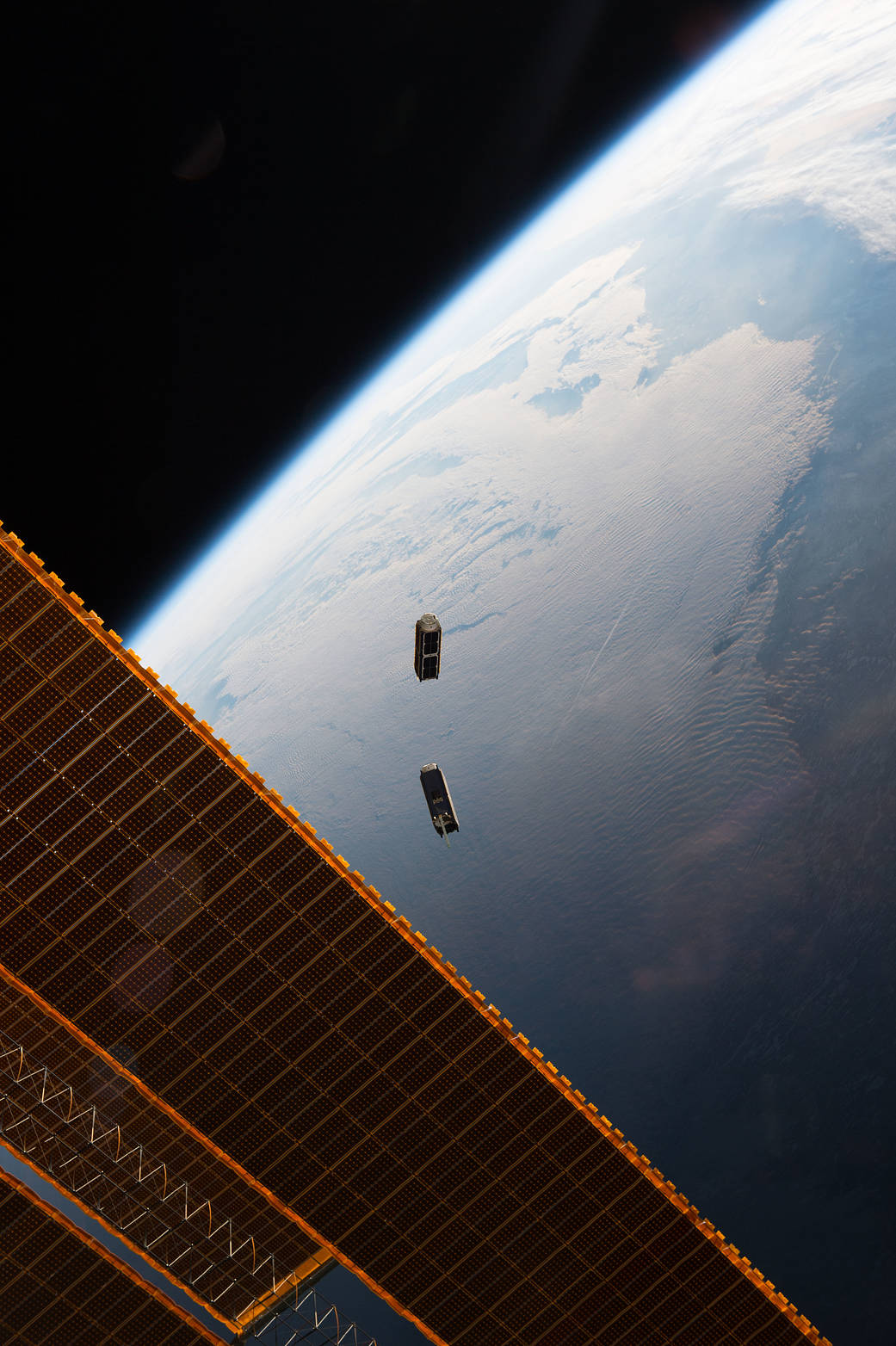
Hubble's technical pitch is unusually simple. A product that already contains a supported Bluetooth Low Energy radio receives a firmware update and the Hubble software development kit. Its radio then transmits a compact signal that the company's satellites can detect from hundreds of kilometers above Earth. Hubble combines that space link with a terrestrial network of phones, gateways and other scanners, allowing one device design to report through ground infrastructure where available and through satellites beyond it. This is narrow-band telemetry for identity, location and sensor readings, not broadband internet from an ordinary Bluetooth chip.
The company reports more than 500,000 active devices, over 100 million terrestrial gateways across 170 countries and more than three million square miles of ground-network coverage. It also says a new product can add connectivity for less than 50 cents in bill-of-materials cost. These figures are company-supplied and have not been accompanied by public, independent measurements of message success rates, latency, battery life or satellite availability across regions. General availability therefore marks the beginning of a larger commercial test rather than proof of uniform global service.
The potential market is broad because Bluetooth radios are already embedded in inexpensive tags, industrial sensors and consumer electronics. Logistics operators could follow individual shipments after they leave a warehouse or cellular corridor. Agricultural and environmental sensors could report from remote land. Construction, energy and emergency teams could locate equipment without installing local gateways. Hubble names Samsara, Texas Instruments, InPlay and smart-label maker Reelables among its partners, suggesting that the company is pursuing both finished enterprise products and integration at the chip level.
There are important constraints behind the headline. A direct-to-satellite Bluetooth link has far less capacity than a cellular connection, so applications must tolerate small payloads and potentially intermittent contact. Antenna orientation, obstruction, weather, radio rules and the number and position of satellites can affect whether a message arrives. Device makers must also evaluate power consumption over real duty cycles, secure the firmware path and protect location data. A low hardware price is only one part of total cost; service fees, integration work and operational reliability will decide whether deployments are economical.
The constellation plan creates another execution test. Six satellites cannot provide the same redundancy or revisit frequency as the proposed 60-satellite network. Hubble must finance, build and launch the remaining spacecraft while supporting developers on the network that exists today. It will also need to demonstrate that its hybrid terrestrial-and-space architecture routes data predictably and that customers can understand when a reading came from a nearby gateway versus an orbital pass. For industrial users, transparent service levels and failure reporting will matter as much as the novelty of the radio link.
INNOVOX analysis: the most consequential part of Hubble's announcement is not the funding round but the attempt to turn a commodity Bluetooth radio into an addressable endpoint across both populated and remote environments. That could push satellite IoT down from tracking vehicles and containers to tracking tools, packages and individual components. The defensible advantage, however, will come from verified coverage, developer adoption and dependable operations—not from the physics demonstration alone. The transition from pilot projects to general availability is precisely where those claims can now be tested by customers rather than press releases.
What to watch next is evidence at production scale. Hubble should publish regional coverage maps, delivery rates, typical latency, energy consumption, supported chipsets and clear pricing for satellite traffic. Satellite launches toward the 60-spacecraft target, independently documented customer deployments and retention beyond pilots will show whether demand is durable. Security disclosures and controls for sensitive location data also deserve scrutiny. If those metrics hold up, Hubble could create a useful low-cost connectivity layer between short-range Bluetooth and expensive satellite terminals; if they do not, general availability will remain more ambition than infrastructure.
INNOVOX analysis
Hubble is attempting to make satellite IoT an extension of a commodity radio rather than a specialized hardware category. The opportunity is significant, but its durable value will depend on verified network performance, secure integration and customer economics after pilot programs become real operations.
What to watch
Watch for independently measured message-delivery rates, latency, power use and geographic coverage; the pace of launches toward 60 satellites; supported chipset growth; transparent service pricing; and evidence that enterprise customers convert pilots into sustained deployments.