
EU leaders put AI sovereignty on the 2027 agenda—but leave the investment gap open
The European Council’s first in-depth AI discussion produced a February follow-up and a 2027 social summit. It did not produce new funding, binding targets or a timetable for Europe’s stalled computing ambitions.
The story
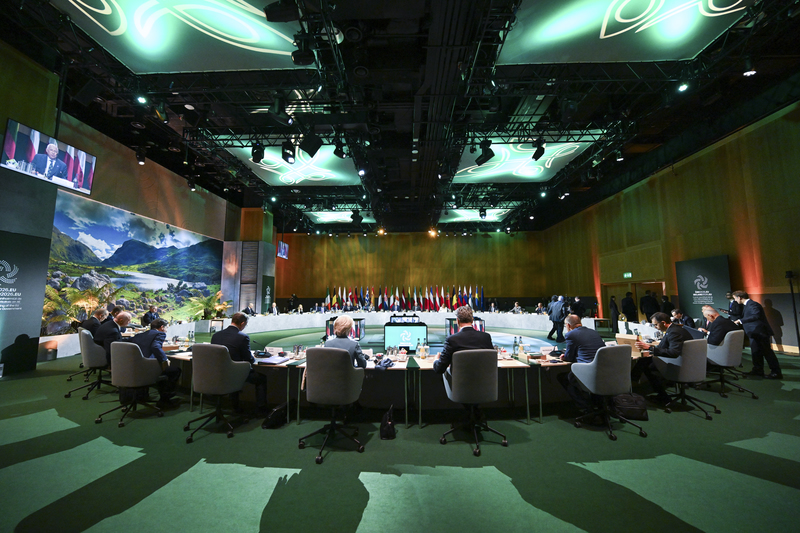
European Union leaders have elevated artificial intelligence to a recurring head-of-government issue, ending their first in-depth AI discussion with commitments to revisit the subject in February and put its social consequences at the center of a 2027 summit. The informal European Council meeting in Dublin on November 13 focused on competitiveness, technological dependence, safety and labor markets. It did not announce new funding, binding investment goals or a delivery timetable.
European Council President António Costa said the discussion had two strands. The first asked how Europe could become a leading and sovereign participant in critical parts of the AI value chain. He identified three requirements: mobilizing public and private capital for competitive European models, reducing dangerous dependencies in supply chains, and securing affordable clean energy for infrastructure. The second strand covered safety, accountability and public trust.
The most definite outcome was a policy calendar. Leaders will return to AI at their Alden Biesen retreat on February 5, 2027. They also plan to make AI’s effects on society and the sustainability of Europe’s social model a central theme of the 2027 Social Summit. Those dates create opportunities for decisions, but they are not decisions on spending, construction or regulation.
That distinction matters because Europe’s gap is partly physical. Training and serving advanced models requires accelerators, data centers, networking, software and large amounts of power. The steering note prepared for Dublin said substantial public and private investment would be required, particularly for large, risky projects that European investors cannot yet finance at the necessary scale. Costa linked the next long-term EU budget and a proposed European Competitiveness Fund to that challenge.
Independent reporting shows why the funding question cannot be deferred indefinitely. Reuters reported ahead of the meeting that the EU Chips Act was likely to miss its ambition of doubling Europe’s global semiconductor-manufacturing share to 20% by 2030. It also reported that a plan for seven AI gigafactories had not fully advanced amid disagreements over competitiveness spending in the 2028–2034 budget. Dublin acknowledged the constraint without resolving it.
The leaders also treated sovereignty as more than local ownership. Their agenda covered access to compute and energy, the ability to build competitive models, adoption by companies and public administrations, and resilience across supply chains. A European model ecosystem that still depends on external accelerators, cloud capacity or capital can reduce some vulnerabilities while retaining others. The practical measure will be whether projects can secure hardware and power, attract customers and operate at competitive cost.
Safety was not presented as a separate brake on that industrial agenda. Costa argued that clear oversight is a precondition for trust and that the EU should use its experience with the AI Act to shape work in the G7, G20 and United Nations. The discussion included children’s rights, democratic integrity, cybersecurity, market concentration and the effect of automation on work. Nobel laureate Geoffrey Hinton briefed leaders on risk, while Mistral AI chief executive Arthur Mensch addressed competitiveness and sovereignty.
The presence of both speakers captured Europe’s central tension: it wants faster domestic capability and stronger safeguards at the same time. Those objectives are not inherently incompatible, but they compete for political attention and can create tradeoffs in procurement, compliance costs and deployment speed. The meeting’s lack of formal conclusions avoided a premature choice, while also leaving companies, researchers and workers without new operational guidance.
INNOVOX analysis: Dublin’s significance is institutional rather than financial. AI is now being discussed alongside security, budgets and the European social model at the highest political level. That can improve coordination across fragmented national plans. Yet repeated references to sovereignty risk becoming a substitute for execution unless the next meetings convert priorities into funded capacity, procurement rules, energy plans and transparent performance measures.
What to watch next is whether the February retreat produces decisions that can be audited. Useful signals would include committed capital rather than headline ceilings, named infrastructure projects with power and procurement plans, model-development funding with access terms, and adoption targets for public services. The 2027 Social Summit should likewise produce measurable commitments on skills, worker transition and accountability. Until then, Dublin marks an agenda shift—not a completed European AI strategy.
INNOVOX analysis
Dublin moved AI from a specialist digital-policy file to a recurring leaders’ issue, which matters for future budgets and industrial coordination. But sovereignty is not an asset that can be declared into existence. Europe’s test is whether the political language becomes financed compute, competitive models, affordable power and measurable adoption without weakening oversight.
What to watch
Watch the February 5 leaders’ retreat, the Commission’s next AI financing proposals, negotiations over the 2028–2034 budget and the European Competitiveness Fund, and concrete contracts for AI gigafactories. The 2027 Social Summit should be judged by whether it produces measurable labor-transition, skills and accountability commitments.