
Claude identifies a previously uncharacterized enzyme system in phage DNA
Anthropic says a coordinated group of Claude agents found a reverse-transcriptase system with CRISPR-like repeat arrays, then human scientists confirmed its molecular components in the lab. Its biological function remains unknown.
The story
Anthropic says its Claude model has identified a previously uncharacterized enzyme system hidden in bacteriophage DNA, offering an unusually concrete test of whether general-purpose AI agents can contribute to basic biological discovery. The system, which the company calls array-associated reverse transcriptases, or ART, combines a reverse transcriptase with a neighboring gene and a long array of regularly spaced DNA repeats. Human researchers subsequently tested key molecular features in Anthropic's Bay Area laboratory. The finding is intriguing, but it is early: the biological function of ART is still unknown and the supporting technical report is a preprint rather than a peer-reviewed paper.
The search began with a high-level instruction to look through a large DNA-sequence database for interesting examples of reverse transcriptases, enzymes that copy RNA into DNA. Anthropic reports that roughly 950 Claude agents worked for 21 hours and consumed 210 million tokens. They assembled more than 200,000 reverse-transcriptase sequences, proposed about 3,500 candidate systems and narrowed that field to 20 for deeper analysis. One agent noticed a repeating DNA pattern beside an unusual reverse transcriptase and investigated whether the arrangement had already been described.
That arrangement matters because repeat arrays can be a sign of programmable biology. CRISPR systems, first recognized through unusual repeated sequences in bacterial DNA, use RNA guides to direct molecular machinery toward particular genetic targets. Anthropic is not claiming that ART is a new CRISPR system or that it can edit genes. It says only that ART brings together characteristics previously seen in a small number of programmable systems: a reverse transcriptase, an accessory protein of unknown function and a structured array of non-coding repeats. Initial experiments indicate that the array is expressed as distinct short RNAs, a clue that warrants further work.
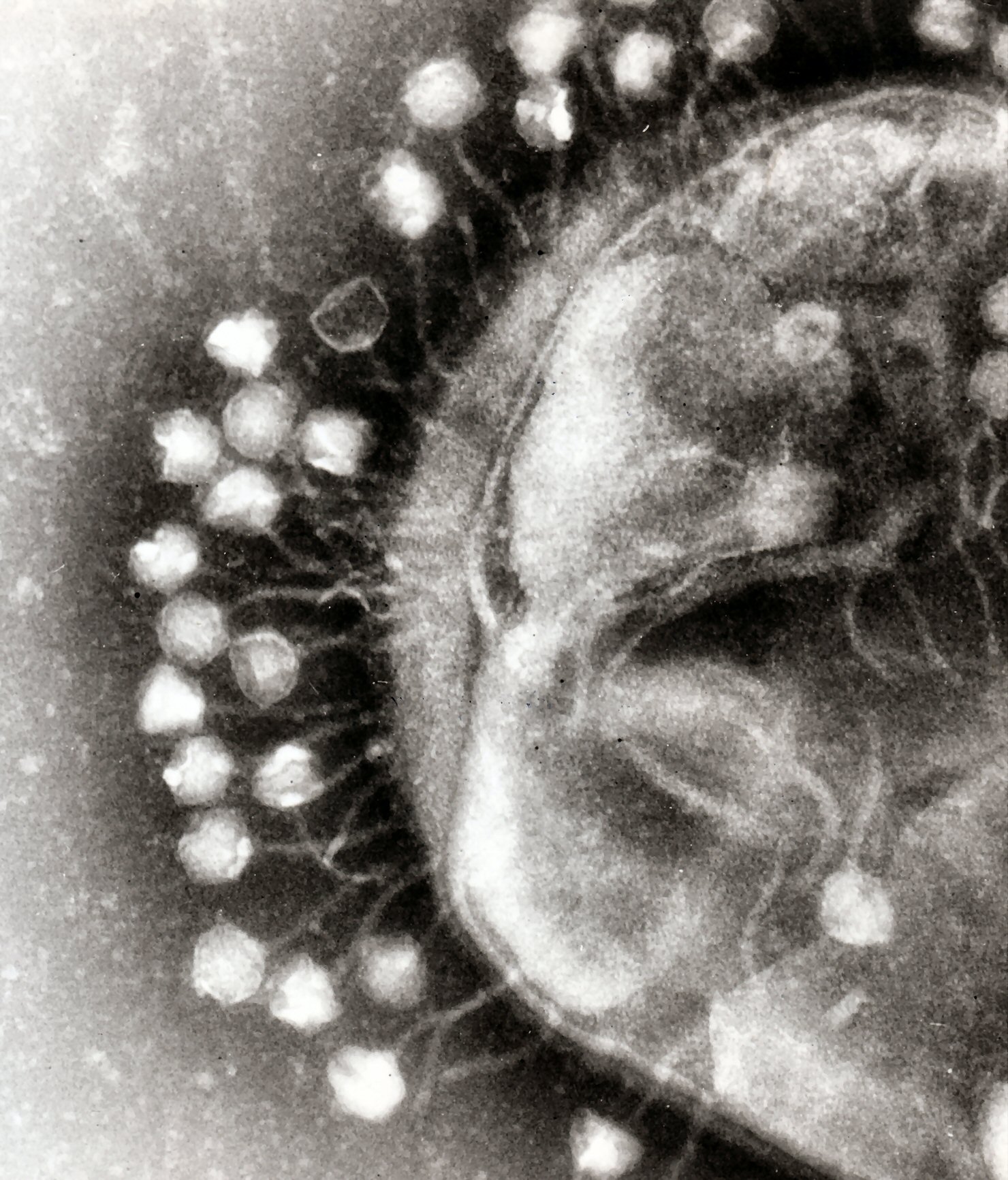
The underlying reverse transcriptase, found in a jumbo phage, had appeared in earlier research. The claimed contribution from Claude was recognizing the wider genomic context and treating the neighboring repeats and accessory protein as parts of one system. That distinction is important. AI did not create an enzyme, demonstrate a medical use or independently run a laboratory. It surfaced a pattern and developed a hypothesis from public sequence data; human scientists reviewed the candidate, performed the physical experiments and interpreted the evidence.
Anthropic's new life-sciences group was formed in spring 2026 to connect large-scale computational searches with experimental verification. The company says its laboratory handles only lower-risk BSL-1 and BSL-2 work, does not work with pathogens capable of infecting humans and leaves all physical experiments to people. Its stated workflow asks Claude to reproduce established findings first, scan unexplained protein families and genomic neighborhoods, prepare readable candidate reports, and then challenge the evidence before a human team decides what deserves testing.
Independent reporting by Reuters confirmed Anthropic's announcement and its description of ART, but the central scientific evidence still comes from the company and its researchers. The preprint needs scrutiny from specialists, reproducible analyses and experimental confirmation outside Anthropic. Researchers must determine what ART does in bacteriophages, whether the repeated RNAs guide the enzyme or serve another role, and whether the system is genuinely programmable. Until then, comparisons with CRISPR should be read as structural context, not as evidence of an equivalent technology or therapeutic platform.
Even with those limits, the process is potentially significant. Genome databases contain enormous numbers of proteins and genetic neighborhoods with no known function, while expert attention and laboratory capacity are scarce. A system that can organize large parallel searches, discard weak candidates and explain why a small set merits testing could change the economics of genome mining. The valuable output is not a flood of plausible text; it is a ranked hypothesis that survives laboratory contact. ART offers an early example of that closed loop, though one result cannot establish how often the method will succeed.
INNOVOX analysis: this is a better benchmark for AI-assisted science than another model score because it creates a claim that can be falsified by biology. The most important question is not whether an agent sounded insightful while reading DNA, but whether independent teams can reproduce the genomic pattern, validate the RNA products and reveal a coherent mechanism. Anthropic should also disclose the compute cost, selection criteria, false-positive rate and degree of human intervention across the full search. Those details will determine whether the method is a repeatable research instrument or an expensive demonstration selected from many failures.
What to watch next is the experimental arc. Structural studies could show how the reverse transcriptase and accessory protein interact; perturbation experiments could establish whether the repeat array is necessary for activity; and tests across related phages could reveal the system's evolutionary role. Peer review, release of analysis code and candidate datasets, and replication by outside laboratories would strengthen the claim. If ART proves programmable, applications may follow, but the near-term innovation is the research workflow itself: many AI agents searching at scale, with human judgment and wet-lab evidence deciding what counts as discovery.
INNOVOX analysis
ART is meaningful less as a finished biotechnology than as a falsifiable test of agent-assisted discovery. Its value will depend on whether independent laboratories reproduce the result and whether Anthropic can show that the workflow produces useful candidates efficiently rather than selecting one success from an opaque search process.
What to watch
Watch for peer review, outside replication, code and data release, studies defining ART's biological function, evidence that its RNA repeats guide activity, and transparent reporting of compute cost, false positives and human intervention.