
Apple faces a $5.72 billion jury verdict over Taptic Engine patents
A San Diego jury found that Apple infringed two Taction haptics patents and awarded $5.72 billion, but rejected willfulness. The verdict is a major patent result—not the final endpoint of a case Apple says it will appeal.
The story
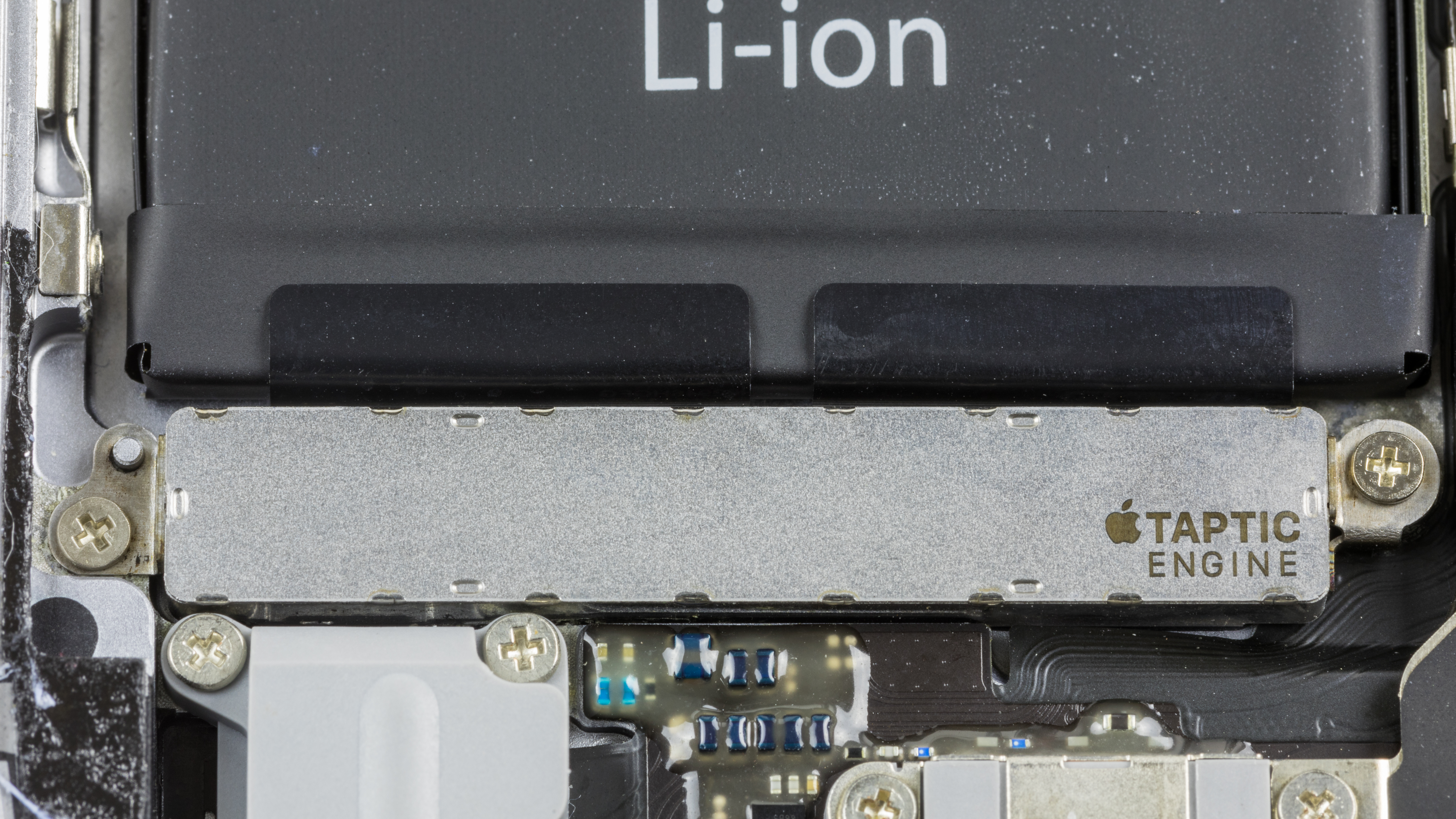
A federal jury in San Diego has found that Apple infringed two patents owned by Taction Technology and awarded the haptics company $5,721,961,750 in damages. The verdict targets technology used in the Taptic Engine, the compact actuator that produces precisely controlled vibrations in products including iPhones and Apple Watches. It is an unusually large result for a patent trial, but it is not yet the last word: Apple said it strongly disagrees with the decision and plans to appeal.
The jury returned its verdict on September 25 after a nine-day trial before U.S. District Judge Todd Robinson in the Southern District of California. According to a summary of the court's minute entry and verdict form, jurors found infringement of claims 17 and 19 of U.S. Patent No. 10,659,885 and claim 16 of U.S. Patent No. 10,820,117. They also rejected Apple's arguments that the asserted claims were invalid. The jury did not find the infringement willful, a distinction that matters because the verdict itself does not establish deliberate misconduct or automatically support enhanced damages.
Taction's patents concern tactile transducers: devices that translate an electrical signal into motion a person can feel. The Federal Circuit described the inventions as transducers designed to create bass-frequency vibrations, generally in the 40-to-200-hertz range, with movement that must be controlled or damped. Those technical words became legally decisive. The asserted claims require a moving portion and a mechanism that damps that movement, and the parties fought over how narrowly the damping limitation should be interpreted.
The lawsuit began in April 2021, when Taction accused Apple of infringing the patents through haptic components used in its devices. The district court initially granted Apple summary judgment of noninfringement in 2023, ending the case before a jury could decide the merits. Taction appealed. In August 2025, the U.S. Court of Appeals for the Federal Circuit vacated that ruling, concluding that the lower court had construed the claims too narrowly, and remanded the dispute for further proceedings. That appellate reversal created the path to this month's trial.
The sequence is a useful reminder that patent disputes are often decided as much by the meaning of a few technical terms as by a dramatic courtroom demonstration. A claim construction can determine which physical structures count as the patented invention. When the Federal Circuit changed the governing interpretation, the factual question of whether Apple's actuators met the claims could no longer be resolved against Taction as a matter of law. Jurors have now answered that question in Taction's favor, but appellate judges may eventually review both the legal interpretation and the trial record again.
Independent reports described the award as the largest U.S. patent verdict on record. That characterization reflects the number returned by the jury, not money already collected by Taction. Patent awards can change substantially after trial. Apple can ask the district judge to overturn the verdict, order a new trial or reduce the damages, and it can appeal the final judgment to the Federal Circuit. The court must also resolve any remaining questions about interest, future use of the patented technology and other remedies before the case reaches a durable conclusion.
Apple's planned appeal will likely focus attention on the damages base as well as liability. In a product as complex as an iPhone, courts must connect patented functionality to the economic value attributed to the accused component rather than simply assume that the patent explains the value of the entire device. The public verdict figure alone does not reveal every calculation the jury accepted. Post-trial filings should expose more of the competing royalty theories, sales assumptions and evidentiary disputes that produced the $5.72 billion number.
INNOVOX analysis: the case demonstrates the leverage that component-level intellectual property can acquire when it sits inside a global hardware platform. A vibration actuator is physically small, yet the accused feature is repeated across enormous device volumes and contributes to recognizable user interactions. That combination can turn a dispute over electromechanical damping into a multibillion-dollar risk. The verdict also shows why appellate claim construction is not procedural housekeeping: changing the boundaries of a technical phrase can move a case from dismissal to one of the largest damages findings in patent history.
What to watch next is the transition from jury verdict to judicially enforceable judgment. The district court will consider post-trial motions, and Apple has announced an appeal. Observers should look for the court's treatment of Taction's damages model, whether any ongoing royalty or other prospective remedy is sought, and how the Federal Circuit evaluates the claim construction that revived the case. Until those stages are complete, the accurate description is a landmark jury verdict under active challenge—not a final transfer of $5.72 billion.
INNOVOX analysis
The scale of the award shows how a narrowly framed component patent can accumulate extraordinary economic value when the accused technology appears across hundreds of millions of devices. Just as important, the result illustrates how claim construction at the appellate stage can reopen a case that had previously ended before trial.
What to watch
Watch for Apple's post-trial motions, the district court's final judgment, any request involving ongoing royalties or other remedies, and a likely Federal Circuit appeal. The damages methodology and the revived claim construction will be central points of scrutiny.